
Supreme Court orders return of P60 Billion to PhilHealth, voids fund transfer provision
Paulo Gaborni December 5, 2025 at 10:49 PM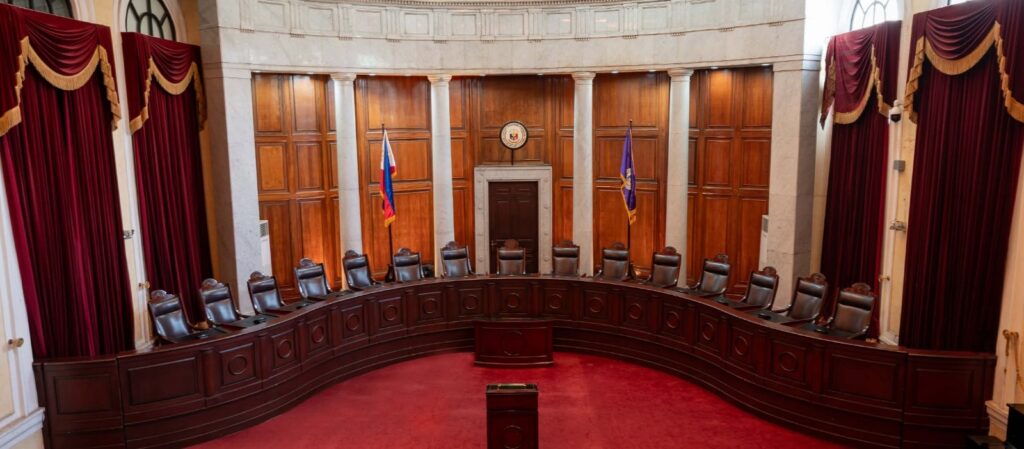
MANILA — The Supreme Court (SC) has unanimously ruled that P60 billion in Philippine Health Insurance Corporation (PhilHealth) funds, previously transferred to the National Treasury, must be returned to the state insurer.
The P60 billion is part of the P89.9 billion in unused PhilHealth funds. The ruling, announced on Friday, December 5, also permanently prohibits the transfer of the remaining P29.9 billion balance.
SC spokesperson Atty. Camille Ting said the ruling, penned by Associate Justice Amy C. Lazaro-Javier, declared void Special Provision 1(d), Chapter XLIII of the 2024 General Appropriations Act (GAA), as well as Department of Finance (DOF) Circular 003-2024.
Special Provision 1(d) had authorized the return of excess reserve funds from government-owned and -controlled corporations (GOCCs), including PhilHealth, to the National Treasury to fund unprogrammed appropriations under the 2024 GAA.
In compliance with the provision and the DOF circular, PhilHealth remitted P60 billion in three tranches. However, under the SC’s restraining order, the remaining P29.9 billion stayed with PhilHealth.
The Supreme Court held that the provision is a “rider” and “not germane or related to the bill’s purpose.”
“The Constitution requires all provisions of the GAA to be germane to its purpose to prevent surprise or fraud upon the legislature and to fairly inform the people of the bills’ subject,” Ting said.
The SC explained that while Special Provision 1(d) was specific in addressing unprogrammed appropriations, it was ambiguous because it introduced the term “fund balance,” which is not defined in the 2024 GAA.
The Court also found the provision void for impliedly repealing Section 11 of the Universal Health Care Act (UHCA) and the Sin Tax Laws.
Section 11 of the UHCA requires PhilHealth to maintain reserve funds up to a two-year ceiling of projected program expenses. Any unused funds must be invested so earnings are added to these reserves. If the reserves exceed the ceiling, the excess must be used to increase benefits under the National Health Insurance Program (NHIP) and reduce members’ contributions.
“The Bureau of the Treasury must set aside these amounts for the UHCA’s implementation, and Congress must fully allocate them to PhilHealth through the GAA. Congress cannot reduce, suspend, or withhold these earmarked funds,” the SC said.
Several groups and public health advocates filed petitions with the SC to block the DOF’s order to transfer P89.9 billion in PhilHealth’s excess funds to the National Treasury.
Then-Finance Secretary Ralph Recto defended the transfer, saying it was within the bounds of the law.
Republic Act No. 11975, the 2024 GAA, “introduced a special provision that allows the government to collect excess funds from government-owned and -controlled corporations like PhilHealth in order to fund unprogrammed appropriations,” Recto said.
Opponents of the fund transfer argued that it violated Section 11 of Republic Act No. 11223, the UHCA, which states that PhilHealth’s reserve funds or income cannot be used as a general fund of the national government.
Following a temporary restraining order issued by the SC in October 2024, PhilHealth was only able to remit P60 billion of the total P89.9 billion.
📷 Supreme Court FB
Facebook Notice for EU!
You need to login to view and post FB Comments!